
Flying With Medical Equipment: Oxygen Concentrators, Power Wheelchairs, and Scooters
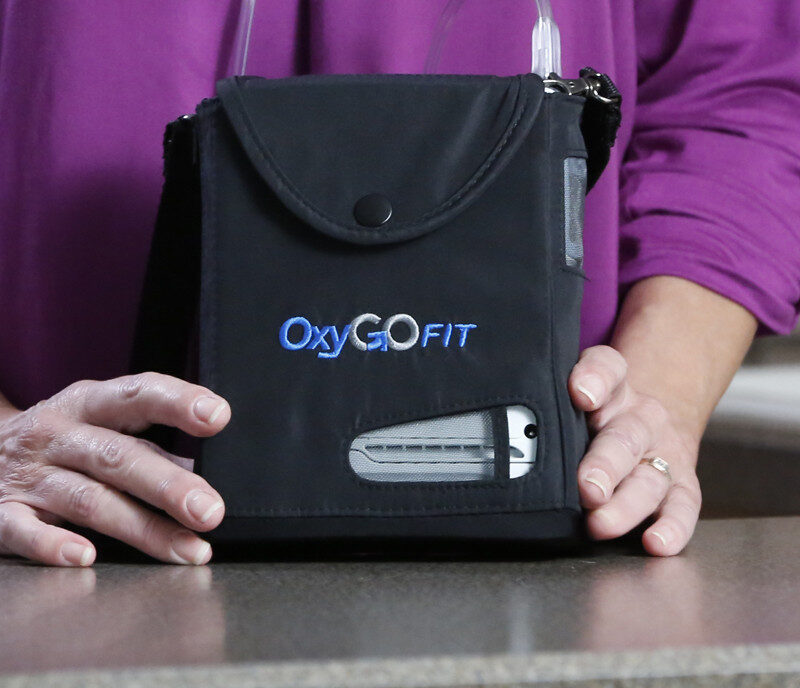
Holiday airports are crowded enough. Adding a portable oxygen concentrator (POC), a power wheelchair, or a mobility scooter, and a little extra planning makes a real difference.
The rules vary by device and by airline, so the most important step is the same every time: confirm the details with your airline before you book. This guide covers what to ask and what to have ready.
Important Reminder: This article is general information. Your airline’s current policy and your healthcare provider’s advice always come first.

What “Airline Approved” Actually Means
No single approval makes a device welcome on every flight.
For oxygen, the FAA sets acceptance criteria that POC manufacturers must meet. Devices that meet them carry a manufacturer’s label saying so, and some older models were cleared under an earlier FAA process. Either way, the airline confirms whether your specific device is accepted on your flight.
For wheelchairs and scooters, the battery decides most things: its chemistry, its watt-hour (Wh) rating, and whether it can be removed. Each airline applies FAA and Department of Transportation rules through its own procedures, which is why the same device can be handled differently from one carrier to the next.
Flying With a Portable Oxygen Concentrator
- Check the label. Look for the manufacturer’s statement that the device meets FAA acceptance criteria, then confirm with your airline that your specific model is accepted.
- Plan for 150% battery life. You’ll need enough charged batteries to run the POC for at least 150% of your expected travel time, including layovers and delays. Most airlines don’t allow in-flight charging, so plan accordingly.
- Keep spare batteries in your carry-on. Protect the terminals from short-circuiting, and ask your airline about limits on spares.
- Notify your airline in advance. Many airlines ask for at least 48 hours’ notice, and some require a physician’s statement that includes your flow setting.
- Know the seating rules. POC users can’t sit in an exit row, and the device is generally stowed under the seat in front of you for takeoff and landing.
- Expect extra screening. TSA allows POCs through the checkpoint with special instructions, and you may be asked to power the device on.
- Talk to Your Doctor: Ask your physician whether your oxygen settings should change at altitude and what to do if you feel unwell in flight.
Flying With a Power Wheelchair or Mobility Scooter
- Know your battery type. Lithium-ion, sealed non-spillable lead-acid, and spillable wet-cell batteries are each handled differently.
- Lithium-ion batteries have a size limit. The FAA limits lithium-ion batteries in mobility devices to 300 Wh. Removable batteries typically come off the device and travel in the cabin. You may carry one spare up to 300 Wh or two spares up to 160 Wh each, in carry-on only. Your airline may set stricter limits.
- Spillable batteries may need to come out. If the chair can’t be stowed upright, wet-cell batteries usually have to be removed and packaged separately by the airline.
- Ask about notice. Many airlines ask for 48 hours or more, particularly for smaller aircraft or when a battery needs special packaging.
- Prepare the device itself. Photograph it before you check it, note the battery’s Wh rating, and carry any removable parts, such as a joystick or cushion. If it’s damaged in transit, report it to the airline before you leave the airport.
What to Bring
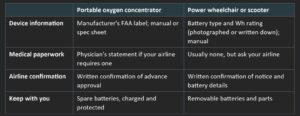
Before You Fly
- Call your airline’s accessibility or disability services line as soon as you book.
- Ask what they require for your exact device and battery.
- Confirm battery limits and your total battery needs, including layovers.
- Contact TSA Cares if you’d like to know what to expect at the checkpoint.
- If you’re flying out of DFW Airport or Love Field, allow extra time for check-in and screening.
- Keep your paperwork in your carry-on, not in checked luggage.
If You Rent Equipment From AMS
AMS rents portable oxygen concentrators and travel power chairs, and we can tell you about a specific model’s battery and labeling. Whether a particular device is accepted for your flight is your airline’s decision, so ask us for the model details before you book and confirm with the airline. If you have questions about equipment for a trip, contact AMS.
Frequently Asked Questions
Can I bring an oxygen concentrator on a plane?
Often yes, if it meets FAA acceptance criteria and your airline allows it. Confirm your model and battery plan before you fly.
Can I fly with a power wheelchair?
In most cases, yes. Handling depends on battery type, so ask about removability, the Wh rating, and required notice.
How do I know if my equipment is “airline approved”?
Check your device’s battery type and Wh rating against your airline’s mobility device policy, then call the accessibility line to confirm.
Can I charge my POC on the plane?
Many airlines don’t permit it, which is why the 150% battery rule matters. Ask your airline.
What paperwork do I need?
It can include the manufacturer’s FAA label, a physician’s statement, and written airline confirmation. Requirements vary by airline.
Can I travel with a mobility scooter?
Usually, yes. Like power wheelchairs, the battery type and size determine how it’s handled.
What should I ask my airline?
Ask what documentation they require, how much advance notice they need, their battery limits, and how they handle your device at the gate.
Sources and Further Reading
Last updated: October 28, 2026. Written by the team at Affordable Medical Supplies, a family-owned provider of medical equipment in Plano and the Dallas area for over 20 years.