Hi-Lo Hospital Beds: Are They Worth It?
Wondering if a hi-lo hospital bed is worth the upgrade? Here’s what makes them safer for patients and easier on caregivers.
Not every hospital bed does the same job. A standard semi electric bed adjusts the head and the foot, but a hi-lo bed adds something a lot more important for home care: it can raise and lower the entire bed, all the way down close to the floor and back up. For patients with more complex needs, that one extra feature can prevent falls, protect caregivers, and genuinely change how care gets delivered at home.
What Is a Hi-Lo Bed, Exactly?
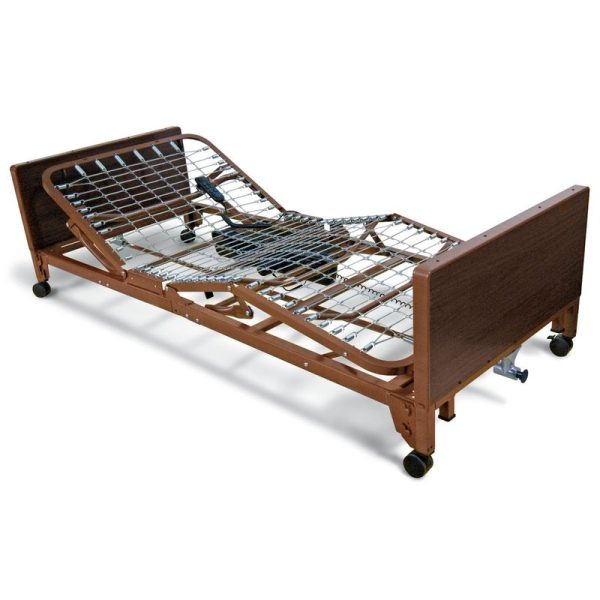
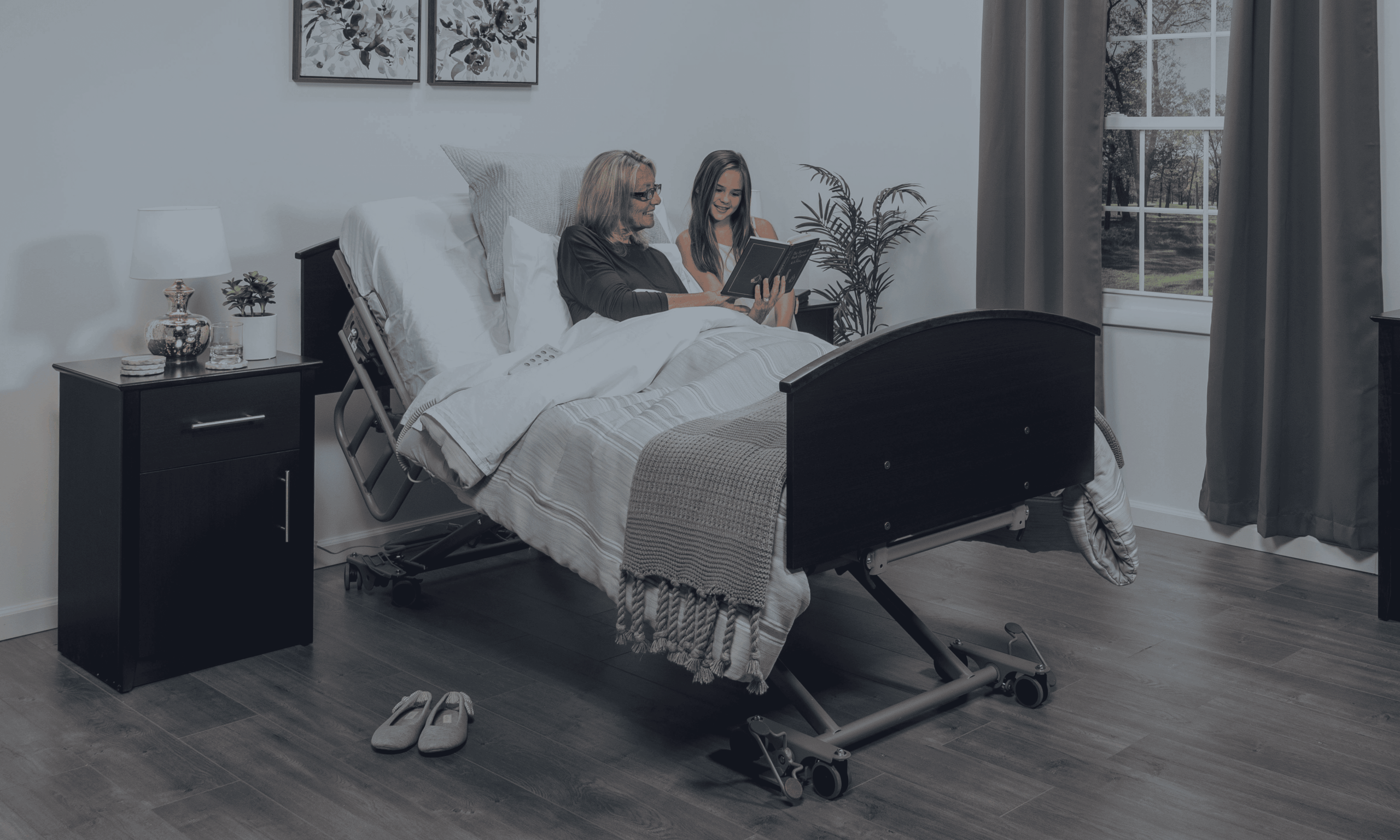
A hi-lo hospital bed is a fully electric bed that raises and lowers the whole sleeping surface, usually anywhere from just a few inches off the floor up to standard counter height or higher, on top of the regular head and foot adjustments you’d expect. These beds are already the standard in hospitals, and they’re showing up more and more in homes for patients with higher level care needs.
Why the Extra Height Range Actually Matters
- Fall prevention. Setting the bed to 8 to 12 inches off the floor makes a real difference for patients who are at risk of rolling or falling out of bed. A fall from that height is a lot less dangerous than a fall from 24 inches or more.
- Easier on caregivers. Raising the bed to waist height for wound care, hygiene tasks, or checkups protects the caregiver’s back and cuts down on injury risk.
- Safer transfers. Matching the bed’s height to a wheelchair or commode makes moving the patient from one to the other a whole lot more controlled and safer for everyone.
- Better for therapy. Home physical and occupational therapists can adjust the height to help with sit to stand training and getting a patient walking again.
- Less skin breakdown. Combined with regular repositioning, hi-lo positioning helps reduce the friction on skin that happens during movement.
- ICU level care at home. For patients on a ventilator, with a tracheostomy, or in hospice with high acuity needs, a hi-lo bed makes it possible to deliver real hospital grade care outside of a hospital.
Who Actually Needs One of These?
- Patients with a moderate to high fall risk
- Hospice patients whose condition is declining
- Anyone receiving daily nursing or therapy visits at home
- Bariatric patients who need help repositioning
- Patients with Alzheimer’s or dementia who tend to wander at night
- Anyone coming home from an ICU or step down unit
Hi-Lo vs a Standard Hospital Bed
A standard semi electric bed adjusts the head and foot with a motor, but you still have to adjust the height manually. A hi-lo bed automates all three, head, foot, and height, all through a simple hand control. For anyone with more complex needs at home, a hi-lo bed is usually the better, and often the physician recommended, choice.
People Also Ask
Does a hi-lo bed cost more to rent than a standard hospital bed? There’s a modest premium, but for patients who need it, the fall prevention and caregiver safety benefits make it well worth the small difference in cost.
Does Medicare cover hi-lo hospital bed rentals? Coverage depends on the patient’s diagnosis and the specific bed classification. We can help you figure out what’s covered in your situation.
How low can a hi-lo bed actually go? Most of our hi-lo beds go down to around 8 to 12 inches from the floor, depending on the model.