Walker or Rollator: Which One Do You Need?

Trying to decide between a walker and a rollator? Here’s how to know which one fits your recovery, balance, and daily needs.
If you or someone you love is heading into recovery, picking the right mobility aid can feel like one more thing on an already long list. People use “walker” and “rollator” like they mean the same thing, but they’re built for different stages of healing and different bodies. Getting it wrong can slow your recovery down, or worse, lead to a fall. Here’s how to figure out which one actually fits where you’re at right now.
What’s a Standard Walker?
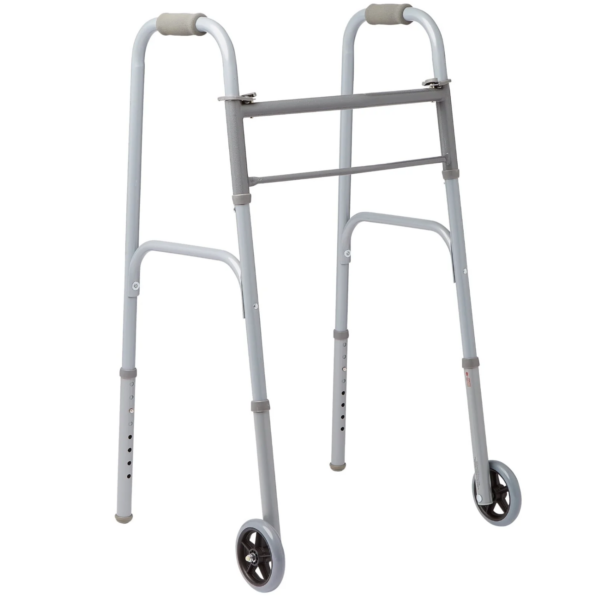
A standard walker is the classic four legged frame with rubber tips on the bottom. No wheels. You lift it, set it down a step ahead, then walk into it. It takes a bit more effort, but that effort buys you serious stability.
This is usually the right call if you:
- Can only put a little weight on a surgical leg
- Struggle with balance
- Are in the first few weeks after a hip or knee replacement
- Have a condition that affects coordination
What’s a Rollator?
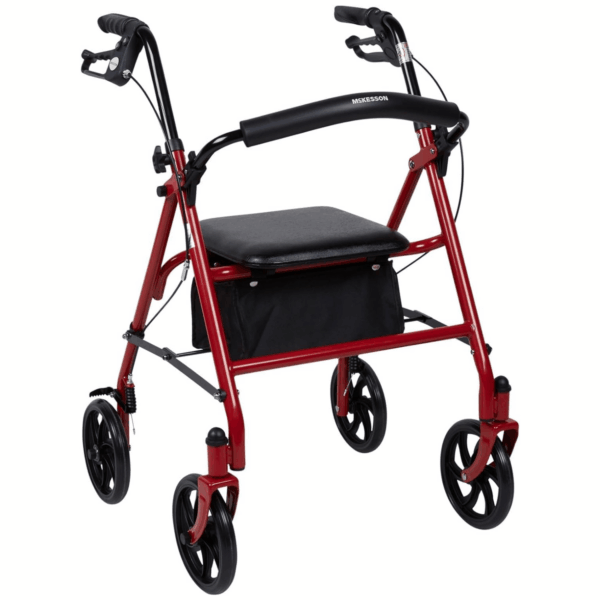
A rollator is the wheeled version, usually with three or four wheels, hand brakes, and a seat built right in. Instead of lifting and placing it, you just roll it along in front of you.
A rollator tends to work better if you:
- Can bear weight fine but get tired over longer distances
- Want to get out and about, run errands, or take walks in the neighborhood
- Like having a seat handy to rest on without hunting for a bench
- Have weak arms or shoulders that make lifting a standard walker tough
Walker vs Rollator at a Glance
Standard Walker |
Rollator |
|
Stability |
Best for unsteady balance |
Good, but needs steadier balance |
Effort |
Lift and move |
Just roll |
Built in seat |
No |
Yes |
Best for |
Right after surgery |
Longer walks and errands |
Outdoor use |
Harder on rough ground |
Handles sidewalks and uneven ground better |
Weight |
Lighter |
Heavier |
When Do You Switch from a Walker to a Rollator?
Most physical therapists start patients on a standard walker right after surgery, then move them to a rollator once they can bear more weight and their balance improves. For hip and knee surgeries, that’s usually somewhere between four and eight weeks, but everyone heals at their own pace. Listen to your therapist over a calendar.
That’s actually why we rent out both. You can start with a standard walker, then switch to a rollator once you’re ready, instead of buying new equipment every time your needs change.
People Also Ask
How do I know if I need a walker or a rollator after surgery? Your surgeon or physical therapist will usually tell you how much weight you can put on your leg, and that’s the biggest factor. Less weight bearing generally means a standard walker first.
Can I rent a walker and a rollator at the same time? Yes. A lot of our customers use a standard walker indoors and a rollator for trips outside during the middle stretch of recovery.
Does Affordable Medical Supplies carry bariatric walkers and rollators? Yes, we stock bariatric rated versions of both for anyone who needs a higher weight capacity.
Will my physical therapist’s recommendation match what I rent? We work with PT teams regularly. If your therapist specifies a certain type of walker, we’ll make sure you get exactly that.